NAS Solutions for Cloud Exit Strategies: Migrating from Vendor-Locked Cloud Storage to High-Performance, Cost-Controlled On-Prem Infrastructure
- Mary J. Williams
- Feb 24
- 5 min read

Cloud storage promised flexibility, scalability, and freedom from infrastructure headaches. Yet many organizations find themselves trapped in a different kind of constraint: vendor lock-in. Rising costs, limited control, and unpredictable pricing models have pushed IT leaders to reconsider their infrastructure strategy.
Network-attached storage (NAS) solutions offer a compelling alternative. By migrating to on-premises NAS systems, businesses can reclaim control over their data, reduce long-term costs, and maintain the performance they need without the strings attached to cloud vendors.
This guide explores how NAS solutions enable successful cloud exit strategies, the benefits of moving to on-prem infrastructure, and practical considerations for making the transition.

Understanding the Cloud Lock-In Problem
Cloud vendors design their platforms to be sticky. Proprietary APIs, specialized services, and complex data transfer fees make leaving difficult and expensive. What starts as a convenient solution can quickly become a financial burden.
Consider the hidden costs. Egress fees for moving data out of the cloud can run into thousands of dollars. Storage costs that seemed reasonable at first scale unpredictably as your data grows. Performance throttling during peak usage times impacts your operations when you need speed most.
For organizations handling sensitive data, regulatory compliance adds another layer of complexity. When your data lives in someone else's infrastructure, you're dependent on their security protocols and geographic distribution. NAS systems bring that control back in-house.
Why Do NAS Solutions Make Sense for Cloud Migration?
NAS solutions provide centralized file storage accessible across your network. Unlike cloud storage that charges per gigabyte with variable pricing, NAS systems offer predictable costs with high-performance local access.
Cost Control and Transparency
On-premises NAS eliminates monthly subscription fees and surprise charges. You invest upfront in hardware that serves your needs for years. Calculate your current cloud storage costs over three to five years, and you'll likely find that NAS systems pay for themselves while delivering better performance.
Performance Advantages
Local storage means your data travels over your internal network rather than the internet. This translates to faster file access, quicker backups, and seamless collaboration for teams working with large files. Video editors, CAD designers, and data scientists particularly benefit from the low-latency access NAS provides.
Data Sovereignty
Your data stays under your physical control. You choose where it's stored, who can access it, and how it's protected. For industries with strict compliance requirements, this level of control isn't just convenient—it's essential.
Planning Your Cloud Exit Strategy
Successfully migrating from cloud storage to NAS solutions requires careful planning. Rushing the process leads to downtime, data loss, and frustrated users.
Assess Your Current Environment
Start by auditing your cloud storage usage. How much data do you have? Which applications depend on cloud storage? What are your performance requirements? Understanding your current state helps you size your NAS infrastructure appropriately.
Document your data access patterns. Some files get accessed constantly while others sit dormant. This insight helps you design a tiered storage strategy that balances performance and cost.
Choose the Right NAS System
NAS solutions come in various configurations, from entry-level two-bay units to enterprise-grade systems supporting hundreds of drives. Your choice depends on several factors:
Capacity needs: Calculate not just your current storage requirements but projected growth over the next three to five years. NAS systems that allow drive expansion give you room to grow without replacing your entire infrastructure.
Performance requirements: Different NAS systems offer varying levels of performance. Consider factors like network connectivity (1GbE vs 10GbE), processor power, and memory. High-performance NAS solutions can rival cloud storage speeds while maintaining local control.
Redundancy and backup: Look for NAS systems with RAID support to protect against drive failures. Built-in snapshot capabilities and replication features add layers of data protection.
Execute the Migration
Migration requires a methodical approach. Start with non-critical data to test your processes before moving mission-critical files.
Create a detailed migration plan that includes data categorization, transfer schedules, and validation procedures. Use tools that verify data integrity during transfer to ensure nothing gets corrupted or lost.
Plan for a parallel operation period where both cloud and NAS systems run simultaneously. This buffer gives you time to verify everything works correctly before completely cutting ties with your cloud provider.
Optimizing Your NAS Infrastructure
Once your migration is complete, fine-tune your NAS systems for optimal performance and efficiency.
Implement Tiered Storage
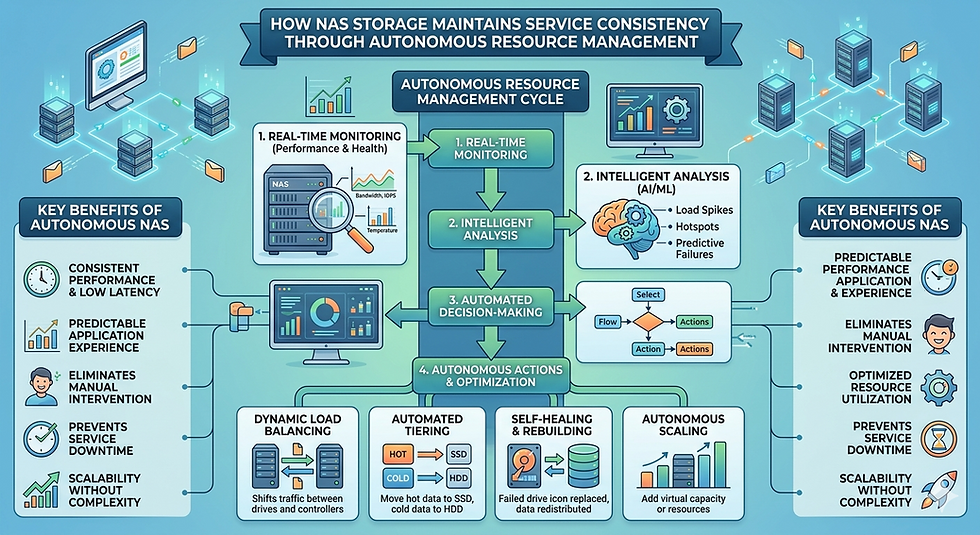
Not all data deserves the same storage treatment. Frequently accessed files benefit from high-speed SSD storage, while archives can live on slower, cheaper spinning drives. Modern NAS solutions support automatic tiering, moving data between storage types based on access patterns.
Establish Backup Protocols
Even with RAID protection, maintaining separate backups is crucial. Configure your NAS to automatically back up to a secondary device or remote location. The 3-2-1 backup rule applies: three copies of your data, on two different media types, with one copy off-site.
Monitor and Maintain
Set up monitoring to track storage capacity, performance metrics, and system health. Regular maintenance—firmware updates, drive health checks, and performance optimization—keeps your NAS infrastructure running smoothly.
Addressing Common Concerns
Organizations considering cloud exit strategies often worry about losing certain cloud conveniences. Modern NAS solutions address these concerns effectively.
Remote access doesn't require cloud storage. NAS systems support secure VPN connections and cloud-sync capabilities that let remote workers access files safely. You maintain control while providing the flexibility your team needs.
Scalability remains achievable with NAS. While you can't provision new storage with a single click, expanding NAS capacity is straightforward. Many systems support hot-swapping drives and seamless expansion units.
Disaster recovery gets simpler with on-premises infrastructure. You control your backup strategy completely, replicating data to multiple locations without depending on a single vendor's redundancy promises.
Making the Transition Work
Moving from cloud storage to NAS solutions represents a significant infrastructure shift. Success requires buy-in from stakeholders, proper planning, and realistic expectations.
Start small if you're uncertain. Migrate a single department or project as a pilot program. Learn from the experience before rolling out enterprise-wide changes.
Consider hybrid approaches for specific use cases. Some applications genuinely benefit from cloud deployment. NAS solutions can coexist with selective cloud services, giving you the best of both worlds without vendor lock-in.
Taking Control of Your Data Infrastructure
Cloud vendor lock-in doesn't have to be permanent. NAS solutions provide a viable path to infrastructure independence, offering cost savings, improved performance, and complete data control.
The initial investment in NAS systems pays dividends through predictable costs and enhanced performance. Your organization regains flexibility to make infrastructure decisions based on your needs rather than a vendor's pricing structure.
Ready to explore your options? Assess your current cloud costs, evaluate your storage requirements, and research NAS systems that fit your environment. The path to infrastructure independence starts with understanding what you need and recognizing that alternatives exist.


Comments